
Quick Answer
- Commercial concrete work depends on traffic load, ADA slopes, drainage, tenant access, phasing, and cure windows.
- Parking lots, dumpster pads, loading zones, curbs, and aprons need different pavement details.
- A useful proposal separates base, thickness, reinforcement, demolition, traffic control, restoration, and striping.
- Related commercial flatwork questions are answered in the commercial FAQ hub.
- Open the commercial flatwork FAQ hub.
Commercial Lot Slabs Built by Traffic Class
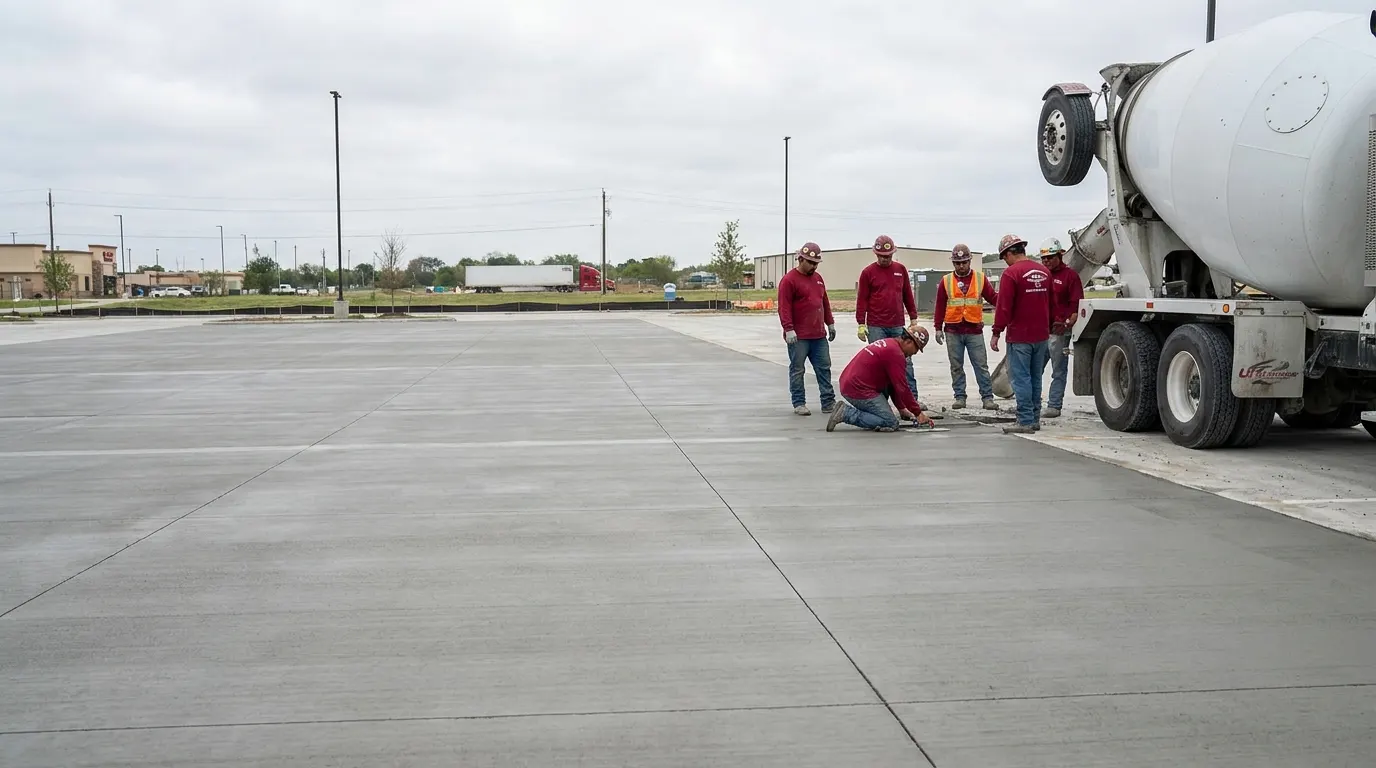
- Concrete parking lot installation covers commercial lots across the NW suburbs - phased so the property stays open.
- Thickness is specced by traffic class: 6 inches for bays, 7-8 for truck lanes and dumpster approaches.
- Lots run roughly $5-$11 per sq ft installed and serve 25-30 years.
Specced by Traffic, Not by Average
Car bays take 6-inch slabs over compacted stone; drive lanes, loading zones, and dumpster approaches take 7-8 inches with reinforcement because turning trucks impose loads that fatigue thinner slabs. Joint grids are engineered, sawcut on schedule, and sealed - joints are where lot maintenance lives for the next 25 years, so they're laid out on a drawing, not by eye.
The Full Scope on One Contract
Demo and haul-off (old concrete recycled where allowed). Subgrade correction - the line item that prevents the slab-on-soft-spot failures that kill lots early on clay. Curb and gutter to village or IDOT profile. ADA ramps with detectable warnings and sub-2% cross-slope stalls formed right the first time. Catch-basin tie-ins, then striping. Concrete's value case closes on lifetime math: no sealcoat cycle, no rutting, and a 25-30 year life that asphalt's 12-15 can't match for owners holding the property.
Parking Lots Need Traffic-Class Sections
A commercial lot should separate parking stalls, drive aisles, dumpster pads, delivery routes, and ADA paths because each section carries different loads. A single slab thickness across the whole site can overprice light areas and underbuild heavy areas. The right bid maps thickness, base, and reinforcement to traffic class.
Drainage and Joints Prevent Early Failure
Commercial slabs fail early when water sits in joints, drains toward the building, or freezes under unsupported panels. A parking lot scope should name slope, catch-basin tie-ins where relevant, joint spacing, and sealant expectations. These details decide whether the lot survives more than the first few freeze-thaw seasons.
Can you work nights and weekends? Yes - occupied retail centers are standard practice, with cure barriers protecting fresh sections.
Do you handle just the truck aprons and dumpster pads on an asphalt lot? Yes - concrete pads inside asphalt lots are one of our most common commercial jobs.
Schedule a Free Commercial Site Walk - 630-595-1518
Common Questions Before You Call
Why choose concrete for parking areas?
Concrete costs more up front than asphalt but handles turning tires, dumpster pads, delivery lanes, and long service cycles better when the pavement section is specified correctly. It is strongest where heavy vehicles repeatedly load the same areas.
What areas need extra attention?
Dumpster enclosures, loading zones, drive aisles, curb returns, ADA stalls, aprons, and storm inlets need detail. Those are the places where thin pavement, bad drainage, or poor joints show first.
How should work be phased?
Phasing should preserve tenant access, emergency routes, trash pickup, deliveries, and ADA parking. The pour plan matters as much as the slab design on an active property.
How should bids be compared?
Compare the total price against the written method, base or drainage correction, thickness where relevant, disposal, access limits, cure timing, and what is included. The better bid is the one that names the work that prevents failure, not the one with the lowest unexplained budget number.
Related Commercial flatwork Guides
More guides on commercial flatwork: Parking lots, curbs, ADA routes, phasing, traffic load, drainage, tenant access, and snow planning.