
Quick Answer
- Commercial concrete work depends on traffic load, ADA slopes, drainage, tenant access, phasing, and cure windows.
- Parking lots, dumpster pads, loading zones, curbs, and aprons need different pavement details.
- A useful proposal separates base, thickness, reinforcement, demolition, traffic control, restoration, and striping.
- Related commercial flatwork questions are answered in the commercial FAQ hub.
- Open the commercial flatwork FAQ hub.
Rather text a photo? Snap the area and text it for a fast ballpark — exact price confirmed on a free on-site visit.
📷 Text a Photo — 630-878-5749Commercial Flatwork Built to Spec
- BG Concrete pours commercial parking lots, curbs and gutters, ADA sidewalks, dumpster pads, and retail flatwork across the NW suburbs.
- Concrete parking lots run roughly $5-$11 per sq ft installed and last 25-30 years versus 12-15 for asphalt.
- Jobs are phased so customer access stays open - striping to striping.
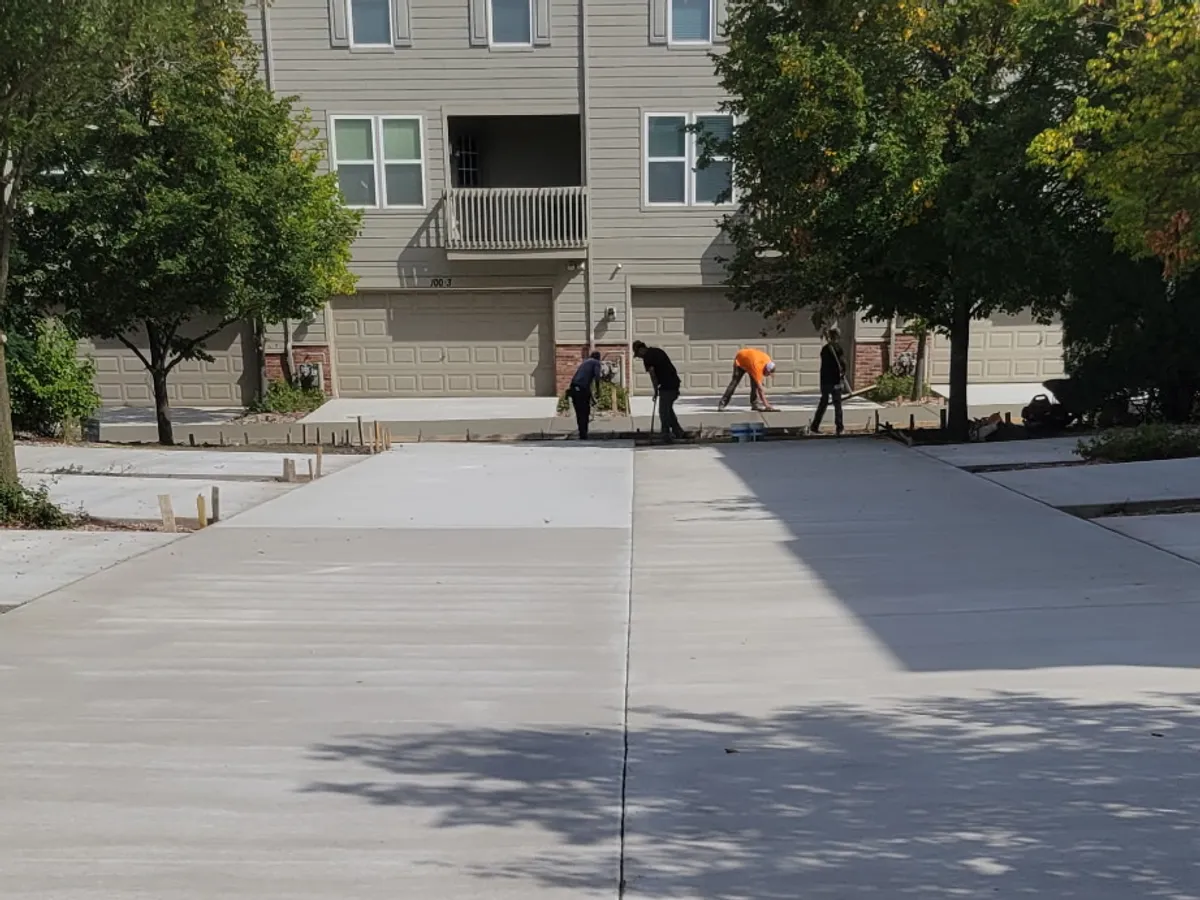
A commercial concrete contractor is judged on schedule and spec compliance, because a closed lot costs the client more than the concrete does. B.G. Concrete Inc. has poured commercial concrete across Chicagoland since 1984 - curbs, parking lots, basements, retail and restoration work - under the same family ownership for 42 years. BG Concrete phases commercial pours - section by section, with cure-time traffic plans - and pours to the engineer's spec: typically 6 inches at 4,000+ PSI over compacted stone for car traffic, 7-8 inches where delivery trucks track.
Concrete vs Asphalt for the Lot
Concrete fits owners holding the property long-term: it costs more up front ($5-$11/sq ft vs $3-$6 for asphalt) but lasts roughly twice as long, doesn't rut at dumpster pads and drive lanes, and skips the 3-year sealcoat cycle. Asphalt fits short hold periods and the tightest budgets. The crossover point is around year 12-15, when the asphalt lot needs replacement and the concrete lot needs joints resealed. Dumpster pads and truck aprons should be concrete even in an asphalt lot - asphalt fails under point loads and turning trucks.
ADA Is Not Optional and Not Hard
ADA-compliant flatwork specifies running slopes under 5%, cross slopes under 2%, detectable warning panels at curb ramps, and landing dimensions at doors - numbers BG Concrete builds into the forms, not checks after the pour. Illinois enforcement runs through inspections and private suits; getting ramps right the first time is dramatically cheaper than the second time.
Commercial Work Is a Schedule Problem First
Commercial concrete is not only a slab; it is access, phasing, cure time, ADA slope, traffic control, and owner disruption. A parking lot, dock apron, or retail sidewalk should be planned in sections so the business can keep operating. The bid should name the closure area, cure window, and temporary access plan.
Specs Need to Match Traffic
Passenger stalls, drive lanes, dumpster pads, and delivery routes do not need the same slab. Car traffic may fit a 6-inch commercial section over compacted stone, while truck paths and dumpster pads often require thicker concrete, stronger mix, and more reinforcement. The job should be priced by load class, not by a single average square-foot number.
Do you handle curb and gutter to IDOT/village spec? Yes - machine-formed or hand-formed, with the profile your engineer or village standard calls out.
Can you pour in occupied retail centers? Yes - night and weekend pours, phased closures, and cure barriers are standard practice.
Schedule a Free Commercial Site Walk - 630-595-1518
Common Questions Before You Call
What do commercial clients need first?
Commercial flatwork needs sequencing, access control, traffic planning, ADA slopes, drainage, saw-cut timing, and cure windows. The best proposal explains how the business keeps operating while concrete is removed, poured, cured, and reopened.
What makes commercial concrete fail early?
Early failure usually comes from undersized thickness, weak base, poor drainage, heavy truck paths, skipped joints, or reopening too soon. The scope should match actual traffic, not a residential driveway habit.
What should property managers compare?
Compare pavement section, PSI, reinforcement, joint plan, phasing, barricades, disposal, restoration, inspection coordination, and what is included. A low number that omits phasing can cost more in tenant disruption.
How should bids be compared?
Compare the total price against the written method, base or drainage correction, thickness where relevant, disposal, access limits, cure timing, and what is included. The better bid is the one that names the work that prevents failure, not the one with the lowest unexplained budget number.
Want proof before you call? Browse examples of our finished commercial concrete and read what Chicagoland homeowners say about working with B.G. Concrete.
Related Commercial flatwork Guides
More guides on commercial flatwork: Parking lots, curbs, ADA routes, phasing, traffic load, drainage, tenant access, and snow planning.